

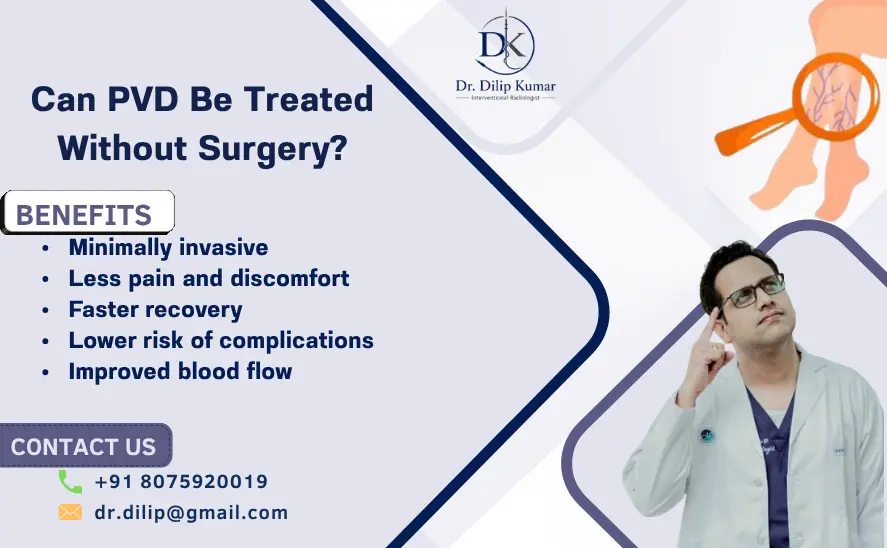
Peripheral vascular disease, often referred to as peripheral artery disease (PAD), occurs when arteries supplying the legs or other extremities become narrowed or blocked, reducing blood flow. It is commonly associated with atherosclerosis, in which plaque builds up inside artery walls. Symptoms can range from leg pain during walking to cold feet, numbness, weak pulses and non-healing wounds.
The good news is that PVD Treatment Without Surgery may be possible for many patients, particularly when the disease is diagnosed early and symptoms are not severe. Lifestyle changes, structured exercise, appropriate medications and control of conditions such as diabetes, high blood pressure and high cholesterol form the foundation of treatment. For patients who continue to have significant symptoms or have severely reduced blood flow, minimally invasive endovascular procedures may provide another option before or instead of traditional open surgery.
Symptoms, Causes and Diagnosis of Peripheral Vascular Disease
Symptoms of Peripheral Vascular Disease
Peripheral vascular disease does not always cause noticeable symptoms in its early stages. When symptoms develop, they may include:
- Pain or cramping in the calf, thigh or hip while walking
- Leg pain that improves after resting
- Numbness or weakness in the legs
- Coldness in one foot or leg compared with the other
- Pale, bluish or otherwise unusual skin colour
- Weak or difficult-to-feel pulses in the feet
- Slow-growing toenails or reduced hair growth on the legs
- Shiny or thin-looking skin
- Sores or wounds that heal slowly
- Rest pain in more advanced disease
The classic symptom is intermittent claudication, where leg discomfort occurs during physical activity because the muscles require more oxygen-rich blood than narrowed arteries can provide.
A wound that does not heal, particularly on the foot or toes, should not be ignored. Severe PAD can progress to chronic limb-threatening ischemia, which requires prompt specialist assessment and may require restoration of blood flow.
Causes and Risk Factors
The most common cause is atherosclerosis, where fatty deposits and cholesterol accumulate inside the arterial walls. Over time, these deposits can narrow the artery and restrict blood flow.
Important risk factors include:
- Diabetes
- Smoking or tobacco exposure
- High cholesterol
- High blood pressure
- Increasing age
- Obesity
- Family history of cardiovascular disease
- Existing coronary or other arterial disease
Diabetes and smoking are particularly important because they can contribute to arterial damage and increase the risk of complications.
Diagnosis
Diagnosis usually begins with a medical history and physical examination. A healthcare professional may check pulses, skin changes, temperature and wounds on the legs and feet.
The ankle-brachial index (ABI) is a commonly used, non-invasive test that compares blood pressure at the ankle with blood pressure in the arm. Depending on the findings, doctors may also recommend Doppler ultrasound, CT angiography, MR angiography or catheter angiography to understand the location and severity of an arterial narrowing or blockage.
Early diagnosis is important because PAD is not simply a leg problem—it is also associated with an increased risk of cardiovascular events such as heart attack and stroke.
Treatment and Procedures for PVD Without Open Surgery
Lifestyle and Medical Treatment
For appropriate patients, PVD Treatment Without Surgery can begin with lifestyle and medical management. Treatment is individualized according to symptoms, circulation, cardiovascular risk and the severity of arterial disease.
1. Structured exercise
Walking-based exercise is an important component of PAD management. Supervised exercise therapy or a structured home/community exercise programme may help improve walking ability and reduce claudication symptoms.
A typical programme may involve walking until moderate symptoms develop, resting, and then repeating the cycle under professional guidance. The exact exercise plan should be discussed with a healthcare professional, especially when symptoms are significant.
2. Smoking cessation
Stopping tobacco use is one of the most important lifestyle changes for people with PAD. Smoking contributes to vascular damage and increases cardiovascular risk.
3. Diabetes management
Good blood sugar control can help reduce vascular complications. Patients with diabetes should also pay particular attention to foot care and promptly report cuts, blisters or wounds that do not heal.
4. Cholesterol and blood pressure control
Doctors may prescribe cholesterol-lowering medicines such as statins and medications for blood pressure when appropriate. These treatments help reduce cardiovascular risk and are an important part of comprehensive PAD care.
5. Antiplatelet or antithrombotic therapy
Depending on the patient’s condition and bleeding risk, doctors may prescribe antiplatelet or other antithrombotic medication. These medicines should only be taken according to a qualified healthcare professional’s advice.
Minimally Invasive Endovascular Treatment
When symptoms remain limiting despite appropriate medical therapy and structured exercise, or when blood flow is severely compromised, revascularization may be considered. Importantly, revascularization does not necessarily mean traditional open surgery.
PVD Treatment Without Surgery can include minimally invasive, catheter-based procedures such as:
- Angioplasty: A small balloon is guided through a catheter to the narrowed portion of the artery and inflated to improve the channel for blood flow.
- Stenting: A small mesh tube may be placed to help keep a treated artery open when clinically appropriate.
- Atherectomy: In selected cases, specialized catheter technology may be used to remove or modify plaque.
- Thrombolysis or thrombectomy: When an acute clot is responsible for reduced blood flow, catheter-based techniques may sometimes be used to dissolve or remove the clot.
The appropriate procedure depends on the location and length of the blockage, the patient’s symptoms, circulation, medical history and overall risk.
The 2024 ACC/AHA guideline recommends revascularization for chronic limb-threatening ischemia to help prevent limb loss, while in patients with claudication it can be considered when symptoms remain functionally limiting despite medical therapy and structured exercise.
Benefits of Minimally Invasive Treatment
When an endovascular procedure is suitable, potential benefits may include:
- Improved blood flow to the affected limb
- Reduction in walking-related symptoms
- Improved walking capacity and daily activity
- Smaller access site compared with open surgery
- Potentially shorter recovery
- Avoidance of major surgical incisions in appropriate cases
However, minimally invasive treatment is not automatically better for every patient. The safest approach is to select treatment according to the patient’s individual vascular anatomy and disease severity.
Recovery, Comparison and When to See a Specialist
Recovery After PVD Treatment
Recovery depends on whether the patient receives lifestyle/medical treatment alone or undergoes an endovascular procedure.
Patients managed conservatively may require an ongoing exercise programme, medication adherence, regular monitoring and management of cardiovascular risk factors. PAD management is generally a long-term process rather than a one-time treatment.
After a catheter-based procedure, patients are monitored for complications at the access site and overall circulation. Recovery can be relatively quick for many minimally invasive procedures, but the exact timeline varies according to the procedure, blockage and general health.
Follow-up is important because treating one arterial narrowing does not eliminate the underlying tendency toward atherosclerosis. Continued exercise, smoking cessation, medication adherence, diabetes management and foot care remain essential.
PVD Treatment Without Surgery vs Open Surgery
| Treatment approach | Common role | General characteristics |
| Lifestyle + medical therapy | Early/mild or stable disease | Exercise, risk-factor management and medicines |
| Endovascular treatment | Selected symptomatic or severe disease | Catheter-based angioplasty, stenting or other interventions |
| Open vascular surgery | Selected complex or severe blockages | May be considered when endovascular options are unsuitable or insufficient |
The decision should not be based solely on avoiding surgery. The priority is to restore or preserve adequate blood flow, relieve disabling symptoms and, when necessary, protect the limb. Current guidelines emphasize individualized, shared decision-making.
Services by Dr. Dilip Kumar
Dr. Dilip Kumar is a Senior Consultant in Endo Vascular & Neuro Interventional Radiology at Aster MIMS Kannur. His listed areas of expertise include vascular and endovascular interventions such as angioplasty and stenting, thrombolysis, thrombectomy, IVC filter placement and treatment of conditions including mesenteric ischemia and acute DVT.
For patients seeking PVD Leg Treatment, a specialist evaluation can help determine whether lifestyle management, medication, endovascular treatment or another vascular approach is most appropriate. Not every arterial blockage requires an operation, but severe symptoms or threatened limb circulation should be assessed without delay.
Frequently Asked Questions
1. Can peripheral vascular disease be treated without surgery?
Yes. Depending on its severity, PAD may be managed with exercise, lifestyle changes, cardiovascular risk-factor control and medications. Some patients who require restoration of blood flow may also be candidates for minimally invasive endovascular treatment rather than open surgery.
2. What is the best PVD treatment?
There is no single best treatment for everyone. The appropriate approach depends on symptoms, the severity and location of arterial narrowing, cardiovascular risk factors and whether the limb is threatened.
3. Can walking improve PVD symptoms?
Structured walking and exercise programmes can improve walking performance and symptoms in many people with PAD. A supervised exercise programme may be particularly useful for patients with intermittent claudication.
4. Is angioplasty a surgery?
Angioplasty is an endovascular, minimally invasive procedure rather than traditional open surgery. A catheter is used to reach the narrowed artery, usually through a small access point, and a balloon may be used to improve blood flow. A stent may sometimes be placed.
5. What are the warning signs of severe PAD?
Rest pain, non-healing wounds, significant skin colour changes, gangrene or sudden worsening of circulation can indicate serious disease. Sudden severe leg pain, coldness, numbness or loss of pulses can represent acute limb ischemia and requires emergency medical assessment.
6. Can diabetes make peripheral vascular disease worse?
Yes. Diabetes is an important risk factor for PAD and can increase the risk of serious foot and limb complications. Blood sugar management and regular foot care are important parts of treatment.
7. Can PVD be completely cured?
PAD related to atherosclerosis is generally considered a chronic condition. Treatment can control risk factors, improve symptoms and circulation, and reduce complications, but long-term management remains important.
8. When is a vascular procedure recommended?
A procedure may be considered when symptoms significantly affect quality of life despite appropriate medical treatment and structured exercise, or when there is chronic limb-threatening ischemia requiring restoration of blood flow.
9. What tests are used for PVD?
Common assessments include physical examination and ABI. Depending on the situation, Doppler ultrasound, CT angiography, MR angiography or catheter angiography may be used to evaluate blood vessels.
10. Where can I seek PVD Leg Treatment in Kannur?
Patients in Kannur and surrounding areas can consult an experienced endovascular and interventional radiology specialist for evaluation. Dr. Dilip Kumar’s listed expertise includes vascular interventions such as angioplasty and stenting, thrombolysis and thrombectomy.
Conclusion
PVD Treatment Without Surgery is a realistic option for many patients, but the right treatment depends on the severity and pattern of arterial disease. Early-stage disease may respond well to structured exercise, smoking cessation, healthy lifestyle changes, cardiovascular risk-factor management and prescribed medicines. When symptoms remain severe or blood flow is critically reduced, minimally invasive endovascular procedures may offer a way to restore circulation without conventional open surgery.
If you are experiencing persistent leg pain while walking, cold feet, numbness, weak pulses or a wound that is not healing, do not assume it is simply an age-related problem. Early vascular evaluation can help identify the cause and guide appropriate treatment.
Looking for expert Peripheral Vascular Disease Treatment in Kannur, Kerala? Book an appointment with Dr. Dilip Kumar, Best Interventional Radiologist in Kannur, for a detailed vascular assessment and individualized treatment plan. His endovascular expertise includes angioplasty, stenting, thrombolysis and thrombectomy, along with other minimally invasive vascular procedures.
Take the next step toward better leg circulation— schedule a consultation with Dr. Dilip Kumar today.