
Healthy blood circulation is essential for delivering oxygen and nutrients to every part of the body. When blood vessels become narrowed or blocked, circulation may decrease, particularly in the legs and feet. This condition can be associated with peripheral vascular disease (PVD), which may affect mobility, comfort, and overall quality of life.
Peripheral artery disease (PAD) is a common form of peripheral vascular disease that develops when arteries supplying the limbs become narrowed, often due to atherosclerosis, a buildup of fatty deposits inside artery walls.
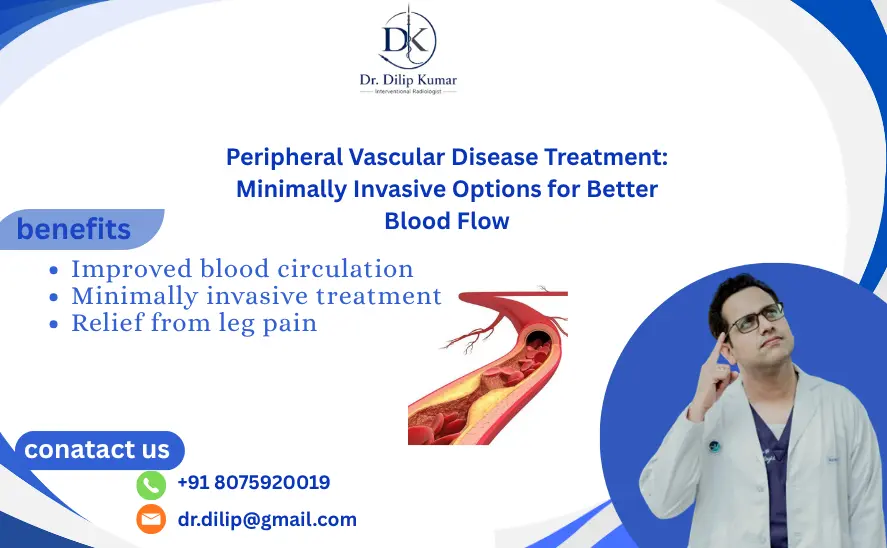
Peripheral Vascular Disease Treatment: Minimally Invasive Options for Better Blood Flow focuses on identifying circulation problems early and choosing appropriate treatment to improve blood supply, relieve symptoms, and reduce the risk of complications.
For eligible patients, modern interventional radiology techniques, including peripheral angioplasty, can restore blood flow through small access points rather than traditional open surgery.
Dr. Dilip Kumar, Interventional Radiologist, in Chala, Kerala, provides specialist consultation for patients seeking evaluation and treatment options for vascular conditions. Understanding the available approaches can help patients make informed decisions with their treating doctor.
Symptoms, Causes, and Diagnosis of Peripheral Vascular Disease
What Are the Common Symptoms?
Peripheral vascular disease can develop gradually, and some people may not notice symptoms during its early stages. Symptoms often become more apparent as circulation worsens.
Common warning signs include:
- Leg pain while walking: Cramping or aching in the calves, thighs, or buttocks that improves after resting. This is known as intermittent claudication.
- Cold feet or toes: One foot may feel noticeably colder than the other.
- Numbness or weakness: Reduced circulation may be associated with unusual sensations or discomfort in the legs.
- Slow-healing wounds: Cuts or sores on the feet and toes may take longer to heal.
- Skin changes: The skin may appear pale, bluish, shiny, or unusually thin.
- Reduced hair growth: Hair growth on the lower legs may decrease.
- Rest pain: Severe disease can cause persistent foot pain, particularly at night or when lying down.
Peripheral Artery Disease Treatment should be considered when symptoms suggest reduced circulation. Early medical assessment can help identify the severity of the condition and prevent avoidable complications.
Important: Sudden severe leg pain, a suddenly cold or pale limb, new numbness, or weakness may indicate acute limb ischemia. Seek emergency medical care immediately rather than waiting for a routine appointment.
What Causes Peripheral Vascular Disease?
The most common cause of PAD is atherosclerosis, in which plaque accumulates inside the arteries and restricts blood flow. Other vascular conditions may also affect circulation.
Risk factors include:
- Diabetes and poorly controlled blood glucose
- Smoking or tobacco use
- High blood pressure
- High cholesterol
- Increasing age
- Chronic kidney disease
- Family history of cardiovascular disease
- Physical inactivity and obesity
Smoking and diabetes are particularly important risk factors for lower-limb arterial disease. However, having one or more risk factors does not automatically mean that someone has PAD.
A consultation helps determine whether symptoms are related to arterial narrowing, venous disease, nerve problems, or another medical condition.
How Is Peripheral Vascular Disease Diagnosed?
An accurate diagnosis is essential before selecting Peripheral Vascular Disease Treatment: Minimally Invasive Options for Better Blood Flow.
The evaluation may include:
Medical history and physical examination: The doctor reviews symptoms, risk factors, skin changes, and pulses in the affected limbs.
Ankle-brachial index (ABI): This non-invasive test compares blood pressure at the ankle with blood pressure in the arm. It helps identify reduced arterial circulation.
Doppler ultrasound: Ultrasound assesses blood flow and may identify narrowed or blocked vessels.
CT angiography or MR angiography: These imaging tests can help map blood vessels and identify the location and extent of narrowing.
Catheter angiography: In selected cases, contrast dye and X-ray imaging provide detailed information about arterial blockages. This may be performed when an intervention is being considered.
Not every patient needs every test. The doctor recommends investigations according to the symptoms, medical history, kidney function, and suspected severity of the disease.
Peripheral Vascular Disease Treatment: Minimally Invasive Options for Better Blood Flow
What Is Peripheral Artery Disease Treatment?
Peripheral Artery Disease Treatment aims to improve circulation, reduce symptoms, protect the affected limb, and lower cardiovascular risk. The right approach depends on the location and severity of the blockage, the patient’s overall health, and the impact of symptoms on daily activities.
Treatment may include lifestyle changes, medication, supervised exercise, endovascular procedures, or surgery in selected cases.
Lifestyle Changes and Medication
For many patients, initial management includes controlling the underlying risk factors.
Recommended measures may include:
- Stopping smoking and avoiding tobacco products.
- Managing diabetes, blood pressure, and cholesterol.
- Following a heart-healthy eating pattern.
- Maintaining regular physical activity as advised by the treating doctor.
- Taking prescribed antiplatelet or cholesterol-lowering medicines when indicated.
- Receiving appropriate foot care, particularly when diabetes or reduced sensation is present.
Supervised exercise therapy is an important treatment for many people with stable PAD and walking-related pain. Medication and lifestyle management remain important even when a procedure is performed.
What Is Peripheral Angioplasty?
Peripheral angioplasty is a minimally invasive, catheter-based procedure used to widen a narrowed or blocked artery, most commonly in the legs.
It may be recommended when symptoms significantly affect daily life despite appropriate medical treatment, or when the severity of arterial disease threatens the limb.
During the procedure, the interventional radiologist generally:
- Accesses the blood vessel: A small puncture is made, usually in the groin or another suitable location, under appropriate local anaesthesia.
- Guides a catheter: Using X-ray guidance, a thin catheter and guidewire are directed towards the narrowed artery.
- Widens the blockage: A small balloon is inflated to expand the narrowed section of the artery.
- Consider a stent if needed: A small mesh tube may be placed to help keep the artery open when clinically appropriate.
- Checks blood flow: Imaging is used to assess the result before the instruments are removed and the access site is managed.
The exact technique depends on the affected artery, the length and severity of the blockage, and the patient’s medical condition.
Peripheral Vascular Disease Treatment: Minimally Invasive Options for Better Blood Flow may include balloon angioplasty, stenting, or other endovascular techniques when these are suitable for the patient’s anatomy and clinical needs.
Other Minimally Invasive and Surgical Options
Not every blockage requires the same procedure.
- Endovascular treatment: Balloon angioplasty, stenting, and selected specialist techniques may be used to improve blood flow.
- Atherectomy: In selected cases, a specialised device is used to remove or modify plaque within an artery.
- Catheter-directed thrombolysis or thrombectomy: Selected patients with acute or recent arterial clotting may need treatment to dissolve or remove a clot.
- Surgical bypass: Open surgery may be appropriate for certain complex or extensive blockages, particularly when an endovascular approach is unsuitable or unsuccessful.
The best treatment is determined by clinical assessment rather than by choosing the least invasive procedure automatically.
Benefits of Minimally Invasive Treatment
When appropriate, peripheral angioplasty and other endovascular procedures can offer several potential advantages:
- Small access punctures instead of a large surgical incision
- Less tissue disruption than conventional open surgery
- Potential relief from walking-related leg pain
- Improved blood flow to the affected limb
- Shorter hospital stays for many uncomplicated procedures
- Recovery that may be quicker than after open surgery
- The possibility of treating selected patients who may not be suitable for major surgery
Results vary between individuals. Angioplasty does not eliminate the underlying tendency to develop atherosclerosis, and treated arteries can narrow again over time. Continued medical management and follow-up are therefore essential.
Recovery After Peripheral Angioplasty
Recovery depends on the patient’s general health, the complexity of the procedure, and whether complications occur.
Many uncomplicated procedures allow discharge on the same day or after a short hospital stay. However, some patients need longer observation or admission.
After treatment, patients may be advised to:
- Follow instructions for caring for the catheter entry site.
- Avoid strenuous activity for the period recommended by their doctor.
- Take prescribed medications exactly as directed.
- Attend scheduled follow-up appointments.
- Monitor the treated limb for changes in colour, temperature, sensation, or pain.
- Follow a personalised exercise and cardiovascular risk-reduction plan.
Seek urgent medical advice for significant bleeding or swelling at the access site, fever, worsening limb pain, or changes in foot colour or temperature. Severe or sudden symptoms require emergency assessment.
Comparing Treatment Options, Recovery, and Local Specialist Care
Angioplasty vs. Open Surgery: What Is the Difference?
| Feature | Peripheral angioplasty | Surgical bypass |
| Approach | Catheter-based procedure | Open surgical operation |
| Access | Small puncture or incision | Surgical incisions |
| Main purpose | Widens a narrowed artery | Creates an alternative route for blood flow |
| Recovery | Often shorter after an uncomplicated procedure | Usually involves a longer recovery |
| Suitability | Depends on blockage location, anatomy, and disease severity | Depends on anatomy, disease severity, and surgical fitness |
| Limitations | Re-narrowing or repeat treatment may occur | Surgical wound complications and graft-related problems are possible |
Neither option is universally better. Some patients benefit from an endovascular procedure, while others may achieve better results with bypass surgery. The decision should be based on the patient’s symptoms, vascular anatomy, expected benefits, procedural risks, and personal preferences.
What Factors Affect Treatment Costs?
The cost of Peripheral Artery Disease Treatment varies according to the individual patient’s condition and the treatment required. A reliable estimate should be provided only after the clinical team understands the case and the proposed procedure.
Factors that may affect the total cost include:
- The location, number, and complexity of arterial blockages
- Diagnostic tests and imaging requirements
- Whether balloon angioplasty alone or a stent is needed
- The number and type of devices used
- Hospital facilities, admission duration, and monitoring requirements
- Anaesthesia, medicines, and follow-up care
- Other medical conditions that require additional management
A consultation is the appropriate starting point for understanding which investigations and treatments may be necessary. No single price applies to every patient.
Finding Peripheral Vascular Disease Treatment in Chala, Kerala
People experiencing leg pain while walking, cold feet, or slow-healing foot wounds may search online for Peripheral Artery Disease Treatment near me or a vascular specialist in Kannur and nearby areas.
Dr. Dilip Kumar is an Interventional Radiologist based in Chala, Kerala, 670621. Patients can seek a consultation to discuss their symptoms, diagnostic findings, and whether a minimally invasive vascular procedure may be suitable.
Peripheral Vascular Disease Treatment: Minimally Invasive Options for Better Blood Flow is a useful starting point for understanding treatment choices, but an online article cannot determine whether a specific patient needs angioplasty, medication, or surgery.
An individual assessment is essential to develop a safe and appropriate treatment plan.
Frequently Asked Questions
1. What is the best treatment for peripheral artery disease?
The best treatment depends on the severity of arterial narrowing and the patient’s symptoms. Lifestyle changes, supervised exercise, and medication are important for many patients. Angioplasty or surgery may be needed for more severe disease.
2. Is peripheral angioplasty a major surgery?
Peripheral angioplasty is generally considered a minimally invasive endovascular procedure rather than major open surgery. It uses a catheter introduced through a small access site. The level of risk depends on the patient’s condition and the complexity of the procedure.
3. Is angioplasty painful?
The access site is generally numbed with local anaesthesia. Patients may experience pressure or temporary discomfort during the procedure. Individual experiences vary, and the treating team can explain the expected sensations and available pain management.
4. How long does recovery take after peripheral angioplasty?
Recovery varies according to the procedure, the patient’s overall health, and whether complications occur. Some patients go home the same day or after a short stay. Activity restrictions and follow-up instructions should be provided by the treating team.
5. Can peripheral artery disease be cured permanently?
PAD is a chronic vascular condition. Treatment can improve blood flow and symptoms, but it does not necessarily eliminate atherosclerosis or the risk of future blockages. Risk-factor management and long-term follow-up remain important.
6. Is angioplasty always better than bypass surgery?
No. Angioplasty may offer a less invasive approach, but bypass surgery can be more appropriate for certain complex blockages. The choice depends on arterial anatomy, disease severity, overall health, and the expected long-term outcome.
7. Does diabetes increase the risk of peripheral vascular disease?
Yes. Diabetes increases the risk of PAD and can contribute to poor wound healing and foot complications. People with diabetes should discuss circulation assessment and regular foot checks with their healthcare professional.
8. When should I consult an interventional radiologist?
Consider consultation if you experience persistent walking-related leg pain, cold feet, non-healing wounds, or if vascular tests reveal arterial narrowing. Sudden severe pain, coldness, numbness, or weakness in a limb requires emergency care.
9. How can I book a consultation with Dr. Dilip Kumar in Kerala?
You can contact Dr. Dilip Kumar, Interventional Radiologist, to enquire about an appointment, available investigations, and treatment options for peripheral vascular disease.
Conclusion
Peripheral vascular disease can significantly affect walking, independence, and limb health when blood circulation is reduced. Early diagnosis, appropriate medication, lifestyle changes, and timely intervention can help manage the condition and reduce the risk of serious complications.
Peripheral Vascular Disease Treatment: Minimally Invasive Options for Better Blood Flow highlights the role of peripheral angioplasty and other treatment approaches in selected patients. Although minimally invasive procedures can improve circulation, the most appropriate option depends on each patient’s symptoms, imaging findings, overall health, and treatment goals.
If you are experiencing symptoms of poor circulation or have been diagnosed with peripheral artery disease, seek an assessment from a qualified vascular specialist.
Book an Appointment with Dr. Dilip Kumar
Consult Dr. Dilip Kumar, Interventional Radiologist, in Chala, Kerala, to discuss your vascular symptoms, diagnostic options, and suitability for minimally invasive treatment.
Contact Details
- Doctor: Dr. Dilip Kumar, Interventional Radiologist
- Location: Chala, Kerala – 670621
- Phone: 080759 20019
- Email: dr.dilip@gmail.com
Take the next step towards better blood flow. Contact the clinic to enquire about an appointment and receive guidance tailored to your medical condition.